
The Apparatus Architect articles through the years has emphasized the importance of defining the mission of the vehicle from the outset of the specification process. While seemingly a common sense, practical starting point for any major vehicle acquisition there are unfortunately any number of fire/rescue departments that unknowingly add a combination of components that just don’t work well in the end, resulting in oversize and overweight in-service units.
Following are a few examples of issues that have developed with newly delivered and in-service apparatus that in some cases may not be easily solved:
Case Study #1: A volunteer fire/rescue department that provided first responder EMS service to the community determined that a smaller, four wheel drive unit that would encourage more drivers to become certified to operate the unit developed specifications with the assistance of the manufacturer for this unit. Along the way the apparatus committee decided that in addition to the EMS capabilities the vehicle should also carry a small pump and water tank for minor incidents.
The result was the acquisition of a commercial, four door cab chassis with a 19,500 pound GYWR carrying a skid fire pump system with a 200 gallon water tank. The manufacturer provided some documentation with the bid proposal to show that the completed unit would have an equipment payload of 2000 pounds. Once the unit was delivered members began the process to conduct driver training with several members commenting that the unit did not handle well and was difficult to stop. Further investigation determined that the department had added 800 pounds of equipment to the apparatus and after consultation it was recommended that the vehicle be weighted to determine its actual in-service weight.
The results of this investigation showed that the unit was overweight on the rear axle and with even one person in the cab the unit would vastly exceed the rated 19,500 pound GVWR. After several meetings with the manufacturer the fire department after gaining advice from an apparatus architect and legal counsel where able to have the builder take the vehicle back and refund the contract price to the department. What started out as a simple project turned into a short term nightmare which resulted in a win for the department.
Case Study #2: When economic times were good a department decided to replace two older pumpers one with a 750 gallon tank and the other with a 1000 gallon tank. The decision was to buy two new units, a rescue engine equipped with a 1000 gallon tank and a sister unit with full height compartments on each side with a 1250 gallon tank. The rational was that since twenty percent of the response area was beyond hydrant protection that the more water carried on each pumper would serve the department well. Both vehicles were equipped with 31,000 pound rated rear axles and were similarly equipped with appliances and hose loads with the rescue/engine carrying hydraulic rescue tools, shoring and stabilization gear.
After several years of operation both vehicles were requiring extensive repairs with one pumper suffering from ongoing electrical issues. The pumpers were over 35 feet in overall length on a 240 inch wheelbase and while they carried everything the department wanted the result was one of units was removed from service and sold after ten years and the other was found to be overweight on the rear axle due to the amount of equipment carried and where it was located within the body compartments.
While combination apparatus such as mini-pumpers, rescue engines and single axle quints all have their place in the fire service the design, outfitting and deployment of these units all have an impact on the department’s operational capabilities. More importantly the safety of our personnel and impact on repair and maintenance budgets are a direct result of the size, weight and condition of our apparatus fleet.
One of the most common faults of apparatus design is to subscribe to the “Incremental Purchase” philosophy. For example if a 1250 gpm pump works, then a 2250 gpm pump must be better. If all of your departments engine apparatus are equipped with a 750 gallon water tank than upsizing the tank to a 1000 gallons may create issues that you had not considered.
While increasing the size of the water tank by 250 gallons may seem like a small amount of $1200 to $1500 dollars this additional size and weight can impact other areas as well. Consider that the additional tank size may also cause the body style to change with an increase in height and length. “No problem”, says the apparatus committee, yet they fail to recognize that the wheelbase just increased by fourteen inches and the height of the hose bed from the ground went up another six inches.
The additional 2085 pounds of water will probably cause an increase in the size of the rear axle, suspension, tires and wheels. If your department has performance requirements to ascend hills at a specific speed to insure safe response times this may also require specifying a big block engine with higher torque ratings which again impacts the transmission and driveline components. In the end the seemingly insignificant cost of the additional 250 gallons now approaches over twenty five thousand dollars.
The initial cost of the apparatus must also consider the life cycle operational costs for the heavier vehicle which will impact tire wear, suspension components and potential limited access to equipment stored in upper body compartments. Most importantly location of properly located fixed steps, access ladders and handrails must all be considered in the overall design of the vehicle. Simply put, what looks great on paper on the blueprint may not work out well once the completed apparatus is delivered and placed into service.
When developing specifications for any new apparatus it is incumbent upon the fire department to develop a complete inventory of tools and equipment including all hose loads which will be included in the bid documents. Included with this inventory will be the anticipated weight of this equipment. This will protect the interests of the organization as your equipment inventory may weight considerably more than the allowances provided within the NFPA 1901 Standard for the different types of apparatus. Additionally the fire department should require a detailed weight analysis for the apparatus as proposed by each manufacturer to insure that the unit will be built to carrying your equipment with a margin for additional equipment which may be placed onto the apparatus during its life cycle.
Unfortunately overweight fire/rescue apparatus are more common that you might expect and every story does not have a happy ending. Prepare to do your homework before the formal specification process starts to insure that the new vehicle will be safe to operate and meet all of your department’s mission requirements.
Photo #1: Wagon 5 from the South End Fire Company in Winchester, Virginia is equipped with a 750 gallon water tank. Note the use of a combination of folding and fixed step surfaces to gain access to the hose bed area.

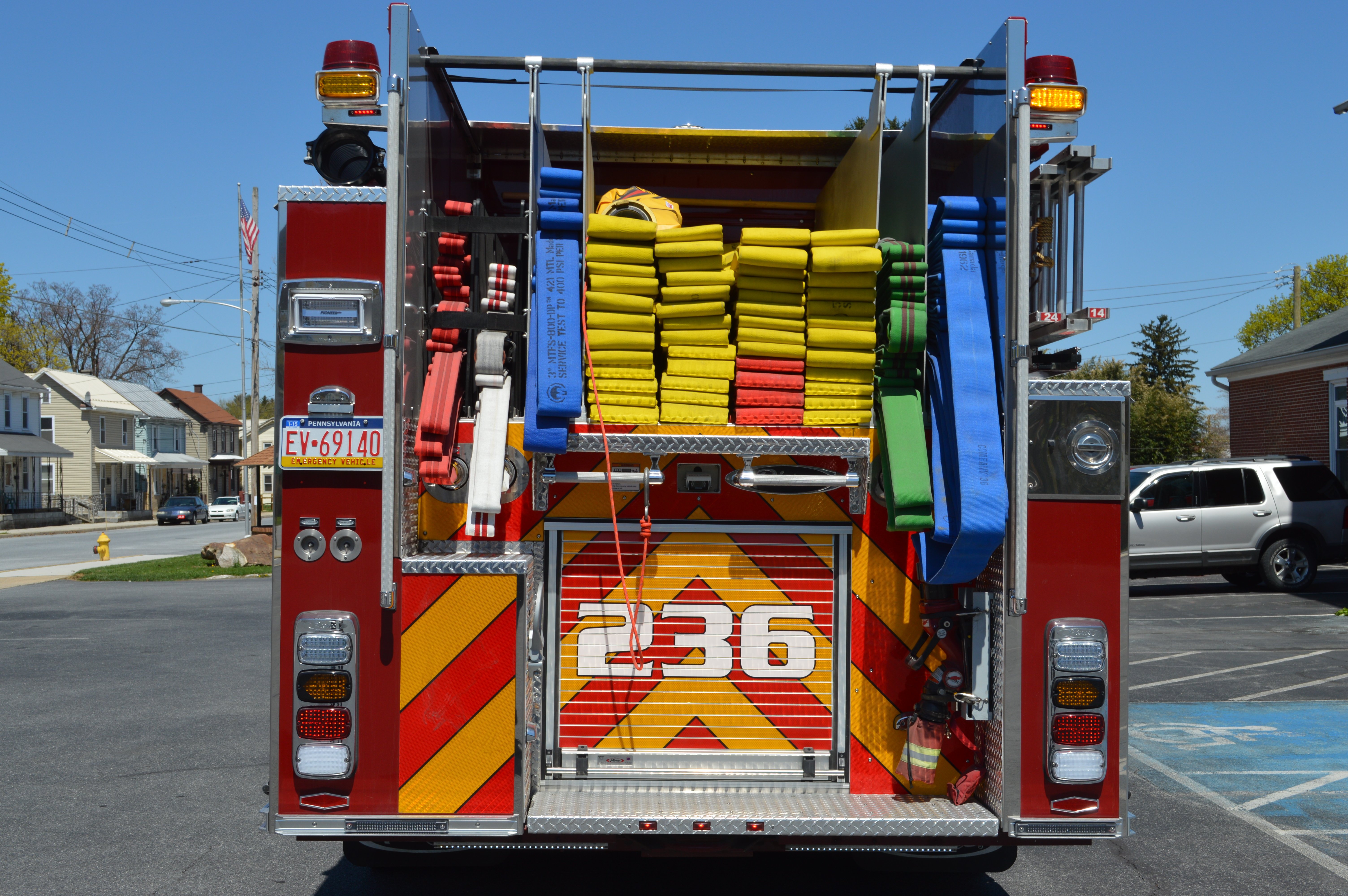
Photo #2: This engine from Mt. Holly Springs, Pennsylvania is equipped with a 970 gallon water tank with a 30 gallon foam cell. Note that the hose bed area is low to the ground and permits safe deployment of the rear attack lines.

Photo #3: This comparison of pumper hose bed heights with smaller vs. larger water tank sizes can impact many areas of apparatus design and chassis components.

All photos by Tom W. Shand
Mike Wilbur and Tom W. Shand
March, 2015