
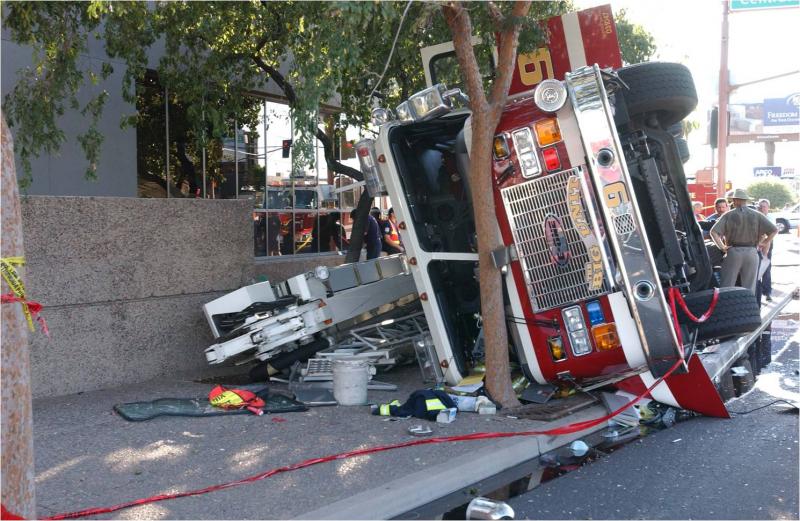
The CDL controversy has reared its ugly head again and so we thought it was time to revisit the issue and put out the facts as we know them to be. The facts for this column have come from a variety of sources including, The Federal Motor Vehicle Safety Act, NIOSH, The NTSB and the U.S. Fire Administration.
In the first part of this column we will present information from the Federal Motor Vehicle Safety act and in that document it says that “It is widely recognized that driving certain Commercial Motor Vehicles (CMVs) requires special skills and knowledge. Prior to implementation of the Commercial Driver’s License (CDL) Program, in a number of States and the District of Columbia, any person licensed to drive an automobile could also legally drive a tractor-trailer or a bus. Even in many of the states that did have a classified licensing system, a person was not skills tested in a representative vehicle. As a result, many drivers were operating motor vehicles that they may not have been qualified to drive.” It is apparent from this first paragraph that someone or some group was very concerned about drivers that were operating motor vehicles that they might not be qualified to drive and that is a concern that we should all have.
COMMERCIAL MOTOR VEHICLE SAFETY ACT OF 1986
“The Commercial Motor Vehicle Safety Act of 1986 was signed into law on October 27, 1986. The goal of the Act is to improve highway safety by ensuring that drivers of large trucks and buses are qualified to operate those vehicles and to remove unsafe and unqualified drivers from the highways. The Act retained the State’s right to issue a driver’s license, but established minimum national standards which States must meet when licensing CMV drivers.”
“The Act corrects the situation that existed prior to 1986 by making it illegal to hold more than one license and by requiring States to adopt testing and licensing standards for truck and bus drivers to check a person’s ability to operate the type of vehicle he/she plans to operate.” The Act recognizes that there are differences between the vehicles that we all drive.
The Commercial Motor Vehicle Safety Act of 1986 was a direct result of many serious Commercial Vehicle Accidents and their drivers that were driving on multiple licenses issued by different states. In one a case a tractor trailer driver had several licenses with all but the last one being suspended or revoked. So this was the Federal Government taking action to rid the roads of bad commercial drivers. “It is important to note that the Act does not require drivers to obtain a separate Federal license; it merely requires States to upgrade their existing testing and licensing programs, if necessary, to conform to the Federal minimum standards. The CDL program places requirements on the CMV driver, the employing motor carrier and the States.”
THE DRIVER
“Drivers have been required to have a CDL in order to drive a CMV since April 1, 1992. The Federal Highway Administration (FHWA) has developed and issued standards for testing and licensing CMV drivers. Among other things, the standards require States to issue CDLs to their CMV drivers only after the driver passes knowledge and skills tests administered by the State related to the type of vehicle to be operated. Drivers need CDLs if they are in interstate, intrastate, or foreign commerce and drive a vehicle that meets one of the following definitions of a CMV:
Classes of License:
The Federal standard requires States to issue a CDL to drivers according to the following license classifications:
Class A — Any combination of vehicles with a GVWR of 26,001 or more pounds provided the GVWR of the vehicle(s) being towed is in excess of 10,000 pounds.
Class B — Any single vehicle with a GVWR of 26,001 or more pounds, or any such vehicle towing a vehicle not in excess of 10,000 pounds GVWR.
Class C — Any single vehicle, or combination of vehicles, that does not meet the definition of Class A or Class B, but is either designed to transport 16 or more passengers, including the driver, or is placarded for hazardous materials.
As you can see many fire service vehicles would fit one or more of the Commercial Vehicle Classes listed.
Firehouse Magazine July 2009
By Michael Wilbur
