
Original Post: http://www.firefighternation.com/article/vehicle-operation-and-apparatus/usfa-releases-emergency-vehicle-safety-initiative-2014
By Bob Vaccaro
Published Thursday, June 19, 2014
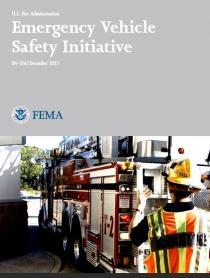
Several weeks ago I received an alert about a new USFA publication, Emergency Vehicle Safety Initiative 2014. This document first came out in December 2013, but if you’re like me, you may have missed it in the end-of-the-year scramble.
Firefighters are more likely to die in motor vehicle-related accidents than during the course of firefighting. This holds true for law enforcement and EMS workers as well. And despite advances in vehicle technology like side airbags and rollover protection, vehicle accidents continue to happen. The past few months have been no different—just a day before I wrote this, in fact, four firefighters were hurt in Charlotte, N.C., when their truck overturned.
That’s why this USFA report is so valuable to all firefighters—chiefs, officers and vehicle operators (motor pump operators, chauffeurs, engineers or whatever you may call your drivers). In my opinion, it’s the bible of emergency vehicle safety for first responders. It not only covers the fire service, but EMS and law enforcement as well.
Bringing It All Together
Back in 2004, the USFA was on a mission to reduce the number of firefighter line-of-duty deaths by 25% within 5 years and by 50% within 10 years. As the report notes, this would be done by funding research, then publishing these findings and making them available to the fire service. Some of this research was focused on vehicle operations. USFA partnered with almost all of the major fire service organizations to produce these publications, and many organizations took it upon themselves to develop their own specialized training, much of which can be found online. A few examples of the publications that came as a result of this USFA-funded initiative:
- Safe Operation of Tankers
- Emergency Vehicle Safety Initiative (first edition, in 2004)
- Best Practices for Emergency Vehicle and Roadway Operations Safety in Emergency Services
- Traffic Incident Management Systems
- Emergency Vehicle Visibility and Conspicuity
The new edition of the Emergency Vehicle Safety Initiative attempts to synthesize all of this information into a 170-page document that can be downloaded as a PDF file, with links to download all of the other publications as well. USFA lists three main purposes behind the document:
- It details the magnitude of injuries and deaths related to emergency vehicle and roadway scene operations.
- It makes emergency responders aware of all of the research conducted regarding emergency vehicle response and roadway incident safety over the past decade.
- It highlights various situations in which the research information applies to emergency operations.
Wealth of Information
The result of all this work is a wealth of information for first responders, as well as standard operating procedures (SOPs) that you can copy and adapt to your department. Some of the topic areas include:
- Accident statistics and case studies
- Common causes of vehicle crashes and how to prevent them
- Vehicle design and its impact on safety
- Loose equipment storage
- Emergency vehicle lighting and colors
- Roadway scene safety
- Regulating emergency vehicle response
- Improving response-related safety
When it comes to reducing firefighter deaths and injuries, we should concern ourselves with the things we can control. The fire apparatus manufacturers are building safer vehicles with added airbags, stability control, better lighting, rollover protection and a host of other items. It is up to us to provide the training and the added initiative of operating safely at accident scenes and responding to and returning from alarms.
There are many organizations out there that are willing to help besides the USFA and FEMA, including the National Volunteer Fire Council, IAFF, IAFC, VFIS, Cumberland Valley Volunteer Firemen’s Association Emergency Responder Safety Institute, Department of Transportation, International Fire Service Training Association, Federal Highway Administration, American National Standards Institute and a whole host more. One excellent website to peruse to gain some added information is ResponderSafety.com.
And if you don’t want to hunt all of these organizations down, all you have to do is download the Emergency Vehicle Safety Initiative 2014 at www.usfa.fema.gov/downloads/pdf/publications/fa_336.pdf.
Make an effort to stay informed and make sure you pass this needed information on to your troops. It may save a life.